
PIVOT · 12-MONTH PRIVATE BUSINESS MENTORSHIP
Build a physician-partnered care management practice of your own.
For experienced pharmacists who want to turn the clinical expertise, relationships and judgment they already have into a practice that works in the real world.
You're new at this. You're not new.
You've already built more than you
think.
You've spent years learning how to make a call with incomplete information. How to talk to a physician who has four minutes. How to catch the thing nobody else caught. How to earn trust from a patient or a provider who didn't know you yet.
Nobody
hands you a certificate for any of that. It just becomes what you do on a Tuesday.
WHAT'S ACTUALLY NEW
Being a pharmacist isn't new. Neither is your clinical judgment, your relationships, or your ability to figure something out when there's no playbook for it.
Physician relationships in a different context. Business economics. Conversations about working together instead of about a patient. Agreements. Enrollment. Workflow. Capacity. Ownership.
You can have twenty years of experience and still be brand new to that. Both are true at once, and neither one makes you deficient.
More knowledge does not equal a business.
The model can be taught. Building it is different.
THE MAP
The Curriculum
A self-paced curriculum that teaches the physician-partnered care management model. The services, the economics, the physician partnership, and the operating considerations that come with running it.
This part is information. Information doesn't take twelve months.
THE TOOLBOX
The Frameworks
Frameworks and implementation resources that help you think through the situations that come up, when they come up.
You don't need all of it on day one. You need the right piece when you hit the thing it solves.
THE NAVIGATION
The Year
Twelve months of private mentorship while you take the model into your own market.
Physicians don't respond because Module 3 says it's time. Agreements don't appear because a curriculum says they should. Patients don't enroll on command.
REAL LIFE RUNS ON ITS OWN CLOCK
The information doesn't take twelve months.
Building does.
HOW IT WORKS
The situations change. The navigation doesn't.
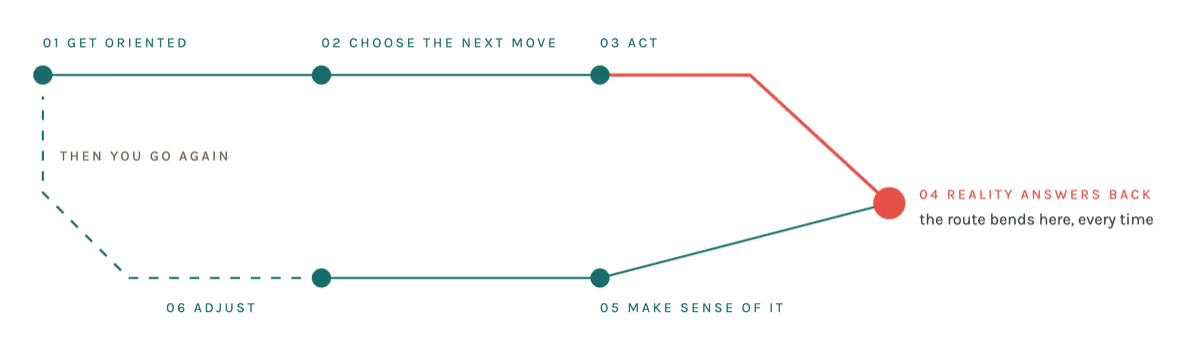
01 to 03. Where are you actually standing, what matters right now, and then you take it into the real world.
04. A physician responds, or doesn't. A contract shows up. The patient list is a mess. Your capacity changes.
05 to 06. You bring your read, I bring experience with the terrain, and you decide what matters next. Then the same navigation meets new terrain.
You build it. You make the decisions. And over time the goal is for your own read to get sharper, which is the whole point.
You still steer. I'm here to help you navigate the terrain.
WHAT STEP 04 LOOKS LIKE IN REAL LIFE
So what does navigation actually mean?
Three forks you can actually hit, and none of them have one universal answer.
FORK 1 – BEFORE THE YES
"The conversation went great. Now they're quiet."
Do you follow up? Wait? Find out who actually decides? Change what you're leading with? Or keep nurturing and let it breathe?
Silence doesn't tell you which one it is. What happened in the room does.
FORK 2 – AFTER THE YES
"They said yes. Now what?"
What did yes actually mean to them? What has to happen before the work can start? Who owns the next decision? What gets built first?
This is one place a good opportunity can quietly stall.
FORK 3 – ONCE IT'S WORKING
"I have patients. Now I'm hitting capacity."
Workflow. Which patients need what. What you should still do yourself. What someone else could eventually do.
Whether you're building a practice or a job with extra steps.
MONTH TWO IS NOT MONTH NINE
A course can teach you the model. It can't know what just happened in your market.
You don't have to start where somebody else started.
More setup doesn't necessarily mean you're further along. A business can be fully formed on paper and still be completely untested in the market.
So we don't start with week one for everybody. We start with where you're actually standing.
Not sure whether PIVOT fits where you are right now? Let's talk about your situation. I'll tell you straight if I don't think this is your move.
One pharmacist walks in with physicians who'd answer her text today and nothing else built.
Another has an LLC, a logo, a domain she bought at 2 a.m., and has never had a single physician conversation.
Another already has a verbal yes and no idea what to do with it.
Another has a signed agreement and just found out that enrolling patients is its own animal.
PROOF
Four pharmacists, four different roads.
Same model. Different starting positions. Different problems along the way. Coral marks the moment the route changed.
When the next answer is in the market
She was researching payer mix instead of calling. The fix was one action that would produce real information.
NAME HERE

When the road takes longer than expected
About a year, eleven calls, two stalls and a deliberate pause. The yes came two weeks after the approach changed.
NAME HERE

When the yes creates the next problem
The agreement came early. Then enrollment, a second client, and the question of who else does the work.
NAME HERE

When growth becomes the problem
Selling was never the hard part. Building was, and then capacity was.
NAME HERE

Different starting positions create different problems. That's exactly what PIVOT is built for.
Who this is for, and who it isn't.
PIVOT MAY FIT IF
You're a licensed pharmacist who's serious about building a physician-partnered care management practice.
You're willing to talk to real people before you have every answer.
You're willing to move, see what happens, and adjust.
You want guidance without handing somebody else your decisions.
You want to own what you build.
PIVOT PROBABLY ISN'T FIT IF
You want to finish learning everything before you make a first move.
You need a guaranteed timeline or a guaranteed outcome.
You want a day-by-day formula that removes the uncertainty.
You want somebody else to make the business decisions for you.
You want the information but you're not going to take it into the real world
PIVOT doesn't require you to be fearless. Eight years in, I still get butterflies walking into a room. It requires you to be willing to move before you're completely certain.
What you actually get
THE CORE OF IT
Private navigation
Twelve months of 1:1 mentorship as you build, with private Zoom sessions around the decisions, roadblocks and stages that actually need them, and text and email support between sessions for the moments that can't wait.
Not twelve lessons. Twelve months of whatever the road hands you.
The physician emails back on a Tuesday and you need a read before Thursday. You don't wait two weeks for your next call to decide what to do.
THE FOUNDATION
Self-paced curriculum teaching the care management model, start to finish.
THE TOOLBOX
Frameworks and implementation tools, used when they're relevant to what you're facing.
YOUR STARTING POSITION MAP
Our first session together produces it: what you're already carrying, what's actually new, what matters now, your next move, and what can wait.

WHO'S NAVIGATING WITH YOU
Why me
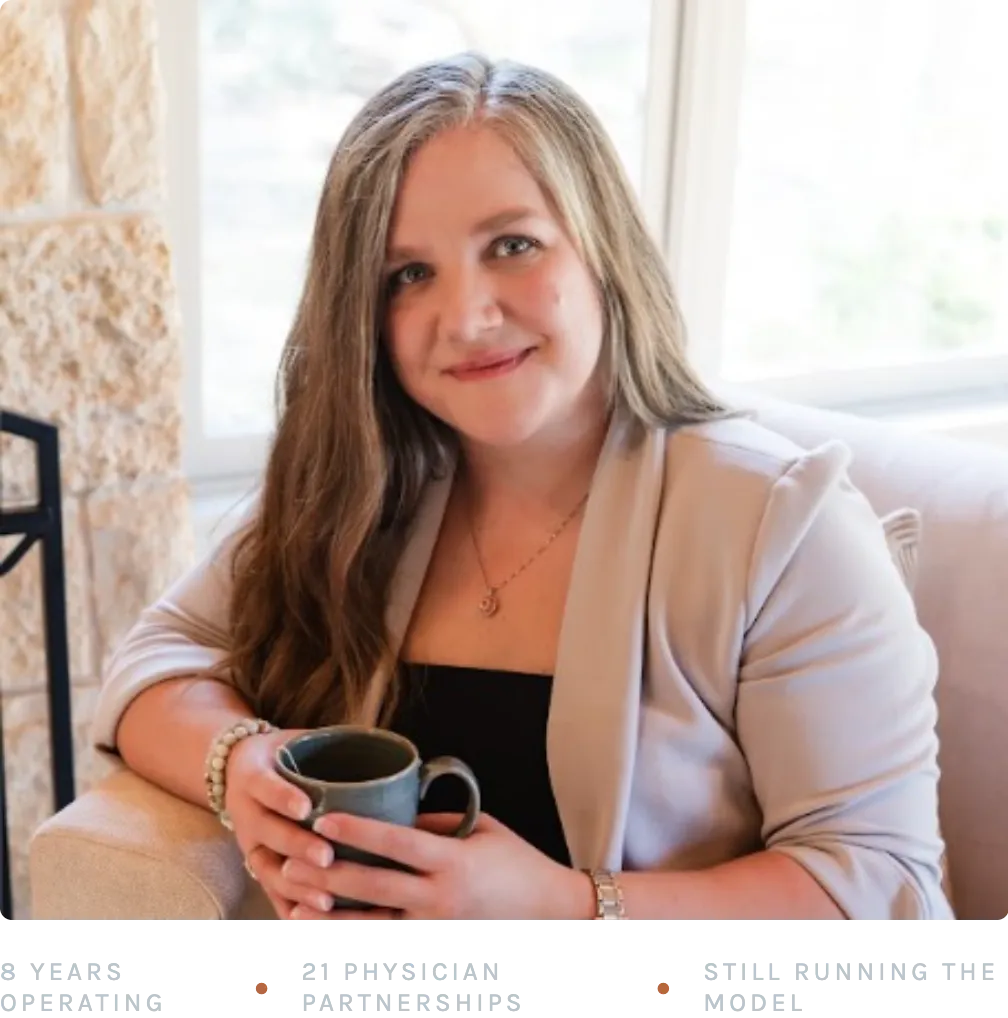
I'm Thea. I built a pharmacist-led care management practice in rural northwestern Pennsylvania, and I still run it. Twenty-one physician partnerships. Hundreds of patients getting support, education and accountability between office visits. A team. Real payroll.
A practice that has to work on a
Tuesday in February, not just in a slide deck.
I've had the physician say yes and I've had the physician go quiet. I've had the messy patient list. I've hired. I've hit capacity. And for the last few years I've watched other pharmacists walk into their own versions of that same terrain, which looks different in every market.
That's the credential. Not a shelf of certificates. I don't teach this from the sidelines. I'm still operating inside the model I'm teaching you.
Not twelve months of content. Not twelve calls. Not a pile of templates you'll never open.
A year of building your own practice, with somebody who knows the terrain, while the problems change underneath you.
BLACK FRIDAY ENROLLMENT
Join PIVOT at $9,500.
This is the final enrollment period at the current investment before PIVOT changes in 2027.
Enrollment closes November 30, 11:59 PM EST.
Your PIVOT year begins together with a live kickoff call on December 3 at 6:00 PM Eastern. Recorded, in case you're working.
You don't have to know exactly how this unfolds before you start. What you do have to decide is whether this is something you seriously want to build.
If it is, start where you actually are.
NOT READY YET? STAY CLOSE.
Subscribe to Prescribed Change
My free newsletter on Substack. Straight talk for pharmacists building physician-partnered care management, from inside a practice that's still running.
Free, on Substack
Read past issues at theablystone.substack.com
TM Pharmacy Consulting
Thea Blystone, PharmD
FOLLOW ALONG
LinkedIn Substack Facebook
© 2026 TM Pharmacy Consulting. All rights reserved.
Privacy Policy Terms & Conditions